Reviewing Scroll Saw Pattern Home Sweet Home 3D for Embroidery
As a designer who spends more time staring at stitch maps than I do sleeping, I have learned to be skeptical of digital assets that promise too much. We often see files labeled as 3D SVG or intricate shapes that look stunning on a screen but turn into a tangled mess under the needle. Recently, I evaluated the Scroll Saw Pattern Home Sweet Home 3D to determine if it holds up in real-world embroidery applications. This is not just about whether the file opens correctly; it is about whether it translates into a high-quality finished product that a customer would proudly wear or display.
First Impressions and Visual Personality
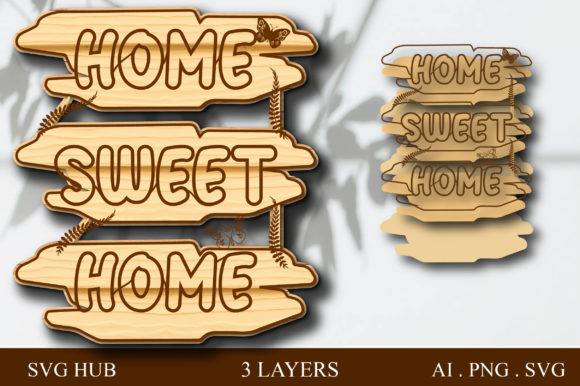
The first thing that strikes you about the Scroll Saw Pattern Home Sweet Home 3D is its architectural charm. It does not rely on overly complex gradients or impossible details. Instead, it leans into the clean, geometric aesthetic typical of scroll saw patterns, which translates surprisingly well to thread work. The mood is warm, inviting, and distinctly domestic, making it an ideal candidate for home decor and personalized gifts.
From a layout perspective, the design balances negative space with solid areas effectively. For an embroidery designer, this is crucial. Too much density leads to puckering, while too little detail can look sparse on textured fabrics. The Shapes category classification fits here because the design relies on strong silhouettes rather than photorealistic shading. When viewing the digital embroidery file, the lines are crisp, suggesting that the original vector data was clean. This is a good sign for scalability, provided you respect the limits of your machine and hoop.
Real-World Application: The Custom Tote Bag Test
To truly understand the value of this design, I imagined applying it to a standard canvas tote bag design. This is a staple item for any Etsy seller or craft business. The "Home Sweet Home" theme resonates deeply with buyers looking for housewarming gifts or market day accessories. In this scenario, the design’s clarity is its biggest asset. On a heavy cotton canvas, the bold lines of the scroll saw pattern would stand out without getting lost in the fabric weave.
I also considered its use on a sweatshirt embroidery project. Here, the context changes slightly. A fleece or French terry background adds bulk. The Scroll Saw Pattern Home Sweet Home 3D works well here because it does not require micro-details that might sink into the pile of the fabric. However, one must be mindful of the stitch density. If the file converts the solid black areas of the scroll saw pattern into dense fill stitch regions, it could become stiff and uncomfortable against the skin. A smart approach would be to use a lighter density fill or even convert parts of it into an applique design to reduce bulk while maintaining the visual impact.
Navigating Technical Challenges
While the design is visually appealing, there are specific scenarios where caution is required. Any experienced embroidery project manager knows that not every fabric behaves the same. If you are stitching this on thin or stretchy material, such as a lightweight t-shirt or a baby onesie, the structural integrity of the scroll saw pattern could cause distortion. The sharp corners and intricate cutouts typical of this style need proper support.
Using the right stabilizer is non-negotiable. For a project like this, a cut-away stabilizer is often safer than tear-away, especially if the finished product will be washed frequently. Additionally, when working with dark fabric, you must consider thread contrast. The design relies on shape recognition, so using a thread color that blends too much with the background will render the details invisible. Conversely, on light fabrics, ensure your bobbin thread does not peek through large open areas.
Another critical consideration is the hoop size. Before purchasing or downloading, verify that the dimensions of the Scroll Saw Pattern Home Sweet Home 3D fit within your available hoops. Trying to shrink a detailed design to fit a small 4x4 hoop can result in lost details and thread breaks. Always check the specific dimensions provided in the file package. Since the product description mentions formats like SVG, AI, and PNG, it is vital to confirm if these are ready-to-stitch embroidery files or if they require conversion software. If they are purely graphic files, you will need to digitize them yourself, adjusting satin stitch widths and running stitch connections manually.
Enhancing Brand Value and Customer Trust
For small shop product creators, the quality of your design assets directly impacts your brand perception. Using a clean, professional-looking design like Scroll Saw Pattern Home Sweet Home 3D signals attention to detail. When customers receive a personalized gift or a piece of custom apparel that looks crisp and well-executed, they are more likely to leave positive reviews and return for future purchases.
This design also lends itself well to printable mockup creation. Because the SVG and PNG files come with transparent backgrounds and no watermarks, you can easily overlay the design onto product photos for your online store. This helps customers visualize the final item, increasing conversion rates. Whether you are selling holiday embroidery items in December or baby embroidery pieces year-round, having versatile assets that look good in marketing materials is half the battle.
Practical Designer Notes for Best Results
Before you commit to stitching this design on a client’s expensive garment, follow these practical steps:
- Test on Scrap Fabric: Always run a test stitch-out on the same type of fabric you plan to use for the final product. This reveals issues with tension, density, and registration.
- Check Thread Colors: Experiment with different thread colors to see which combination highlights the scroll saw details best. Sometimes, a two-tone approach adds depth without increasing complexity.
- Inspect Small Details: Zoom in on the digital file. Are there tiny elements that might not stitch out cleanly? If so, consider simplifying those areas or removing them entirely.
- Verify Licensing: Ensure you understand the usage rights. Can you sell the finished product? Can you use the design assets in commercial commercial embroidery projects? Clarify this before listing items for sale.
- Compare Backgrounds: Test the design on both light and dark fabrics. You may need to adjust underlay stitches or add a border to make the design pop on darker materials.
In conclusion, the Scroll Saw Pattern Home Sweet Home 3D offers a charming, versatile option for designers looking to add a touch of rustic elegance to their portfolio. It performs best on stable, medium-weight fabrics and shines in home decor and gift markets. By paying attention to technical details like stabilizer choice and stitch density, you can transform this digital file into a standout handmade product that delights customers and strengthens your brand. As with any embroidery file, success lies in the preparation and the tester’s eye. Take the time to refine your approach, and this design will serve your craft business well.